Crime Statistics Analysis
Crime Statstics Analysis
Crime Count by Location
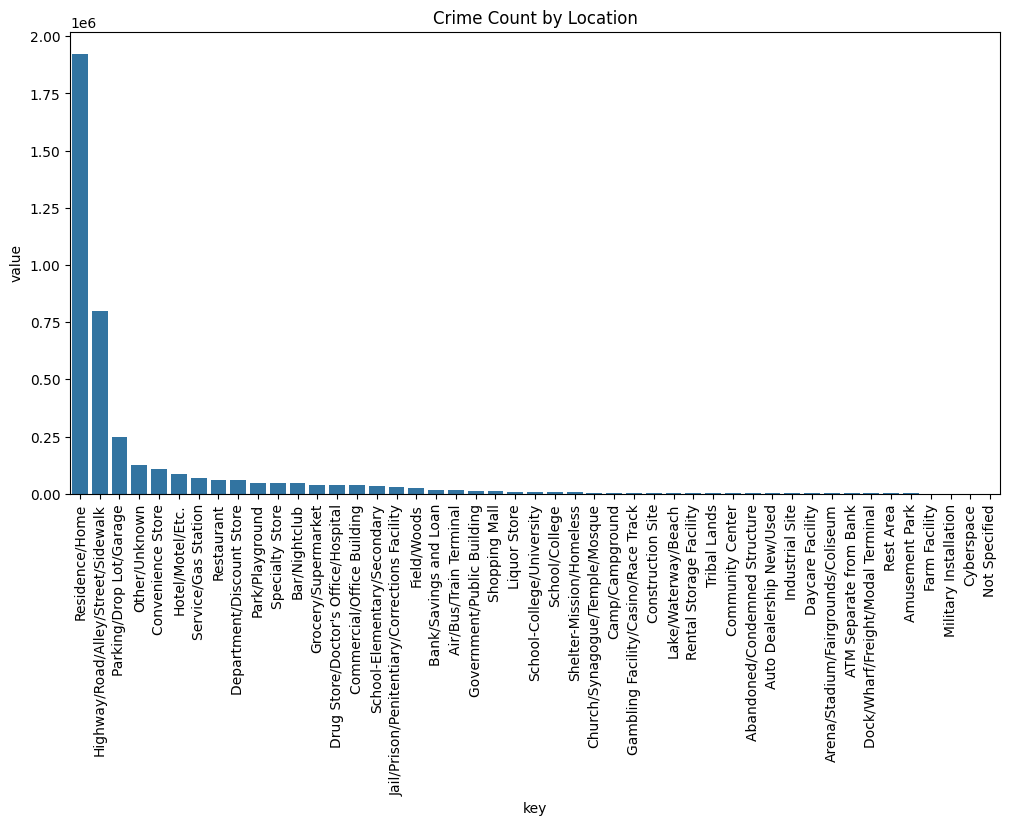
Crime is overwhelmingly concentrated in residences and public streets, with significantly lower rates in other locations. This highlights the need for targeted policing and crime prevention efforts in these high-risk areas. Understanding the underlying factors driving crime in homes and streets is crucial for effective intervention.
Offender Race Distribution
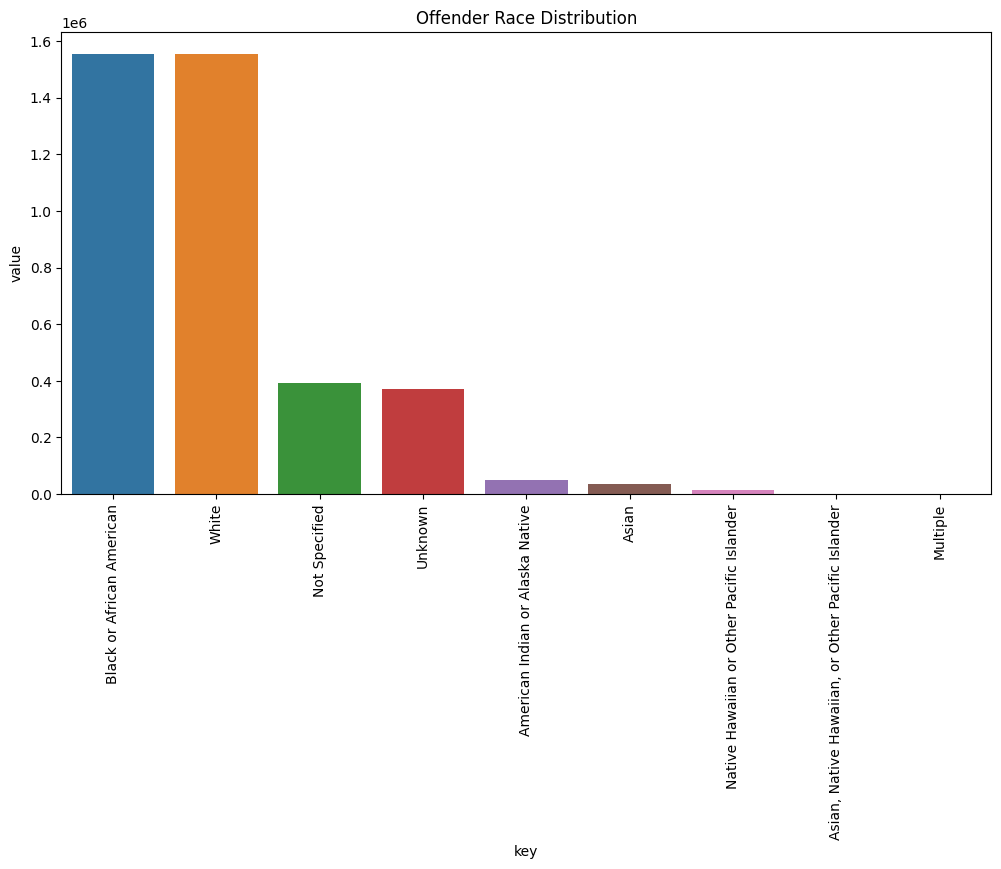
The data shows a disproportionate number of offenders identified as Black or African American and White, raising questions about socio-economic influences and systemic factors. A large number of “Not Specified” and “Unknown” entries also point to gaps in data collection, emphasizing the need for improved reporting practices to support more accurate analysis and intervention.
Victim Race Distribution
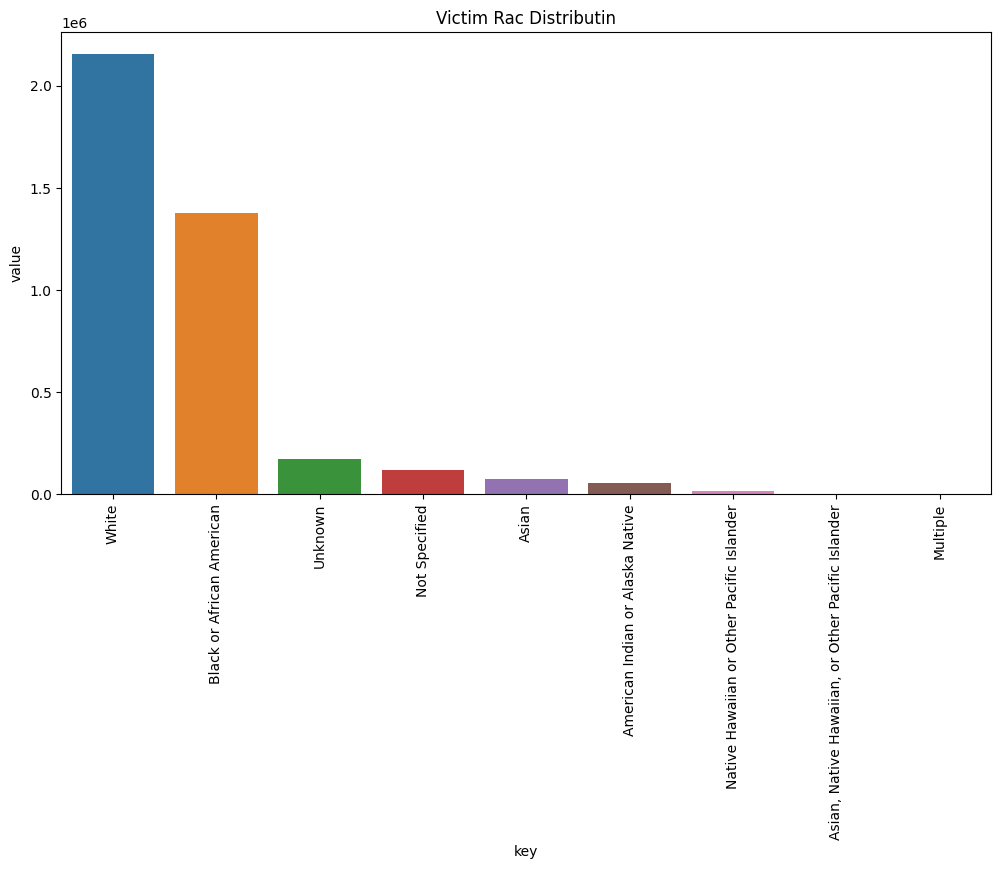
White individuals are the most frequently reported victims, followed by Black or African American individuals, though with a substantial gap between the two. The presence of “Unknown” and “Not Specified” categories signals incomplete data, limiting a full understanding of victimization trends. More precise data collection is essential for targeted crime prevention and community support.
Crime Trends Over Time
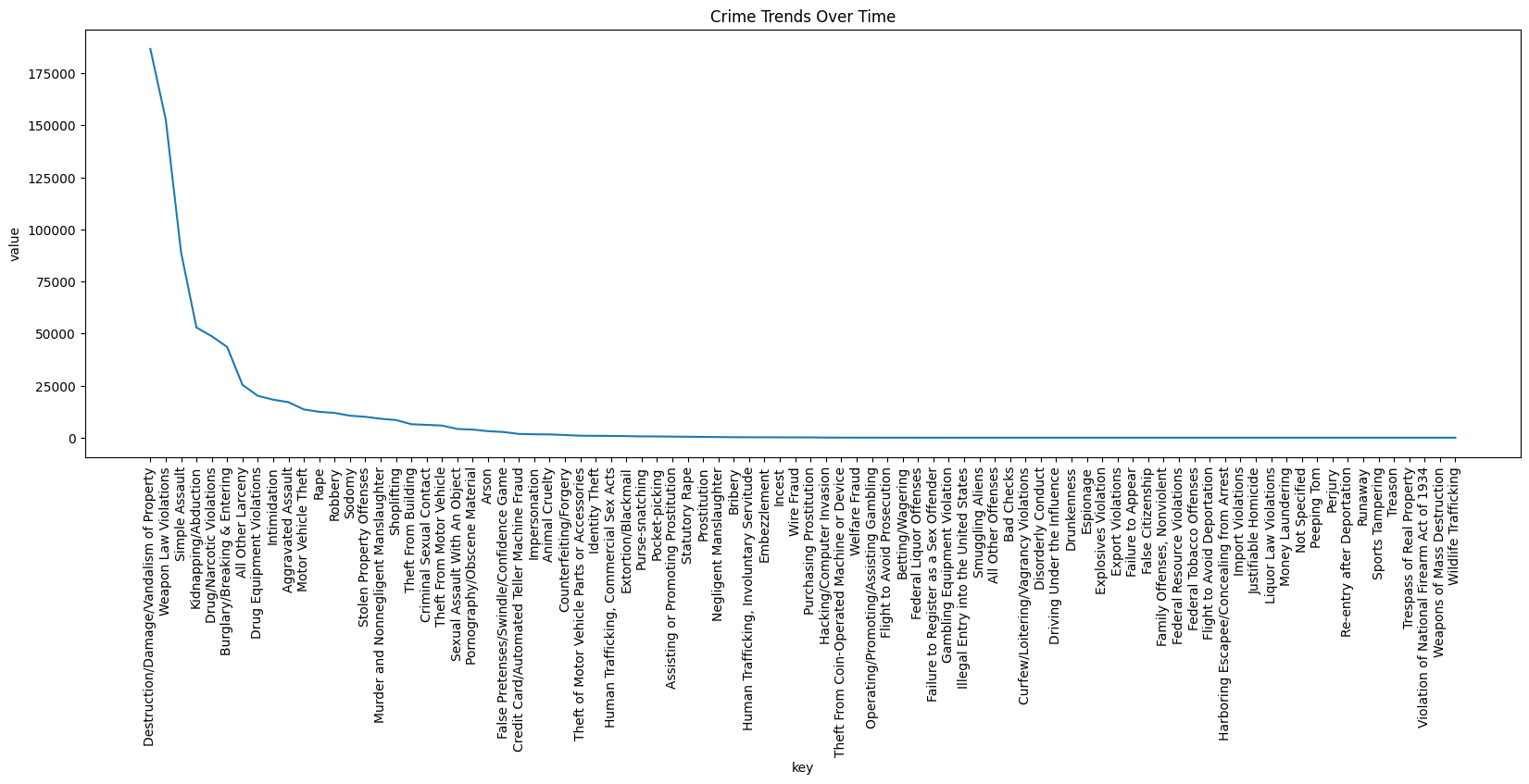
Property crimes, particularly vandalism, dominate this crime landscape, forming a “long tail” distribution where a few offenses are highly prevalent while others occur infrequently. While addressing property damage is a priority, law enforcement must also be prepared to tackle a diverse range of lesser-reported crimes. Understanding the factors driving both common and rare offenses is key to effective crime prevention in the city.